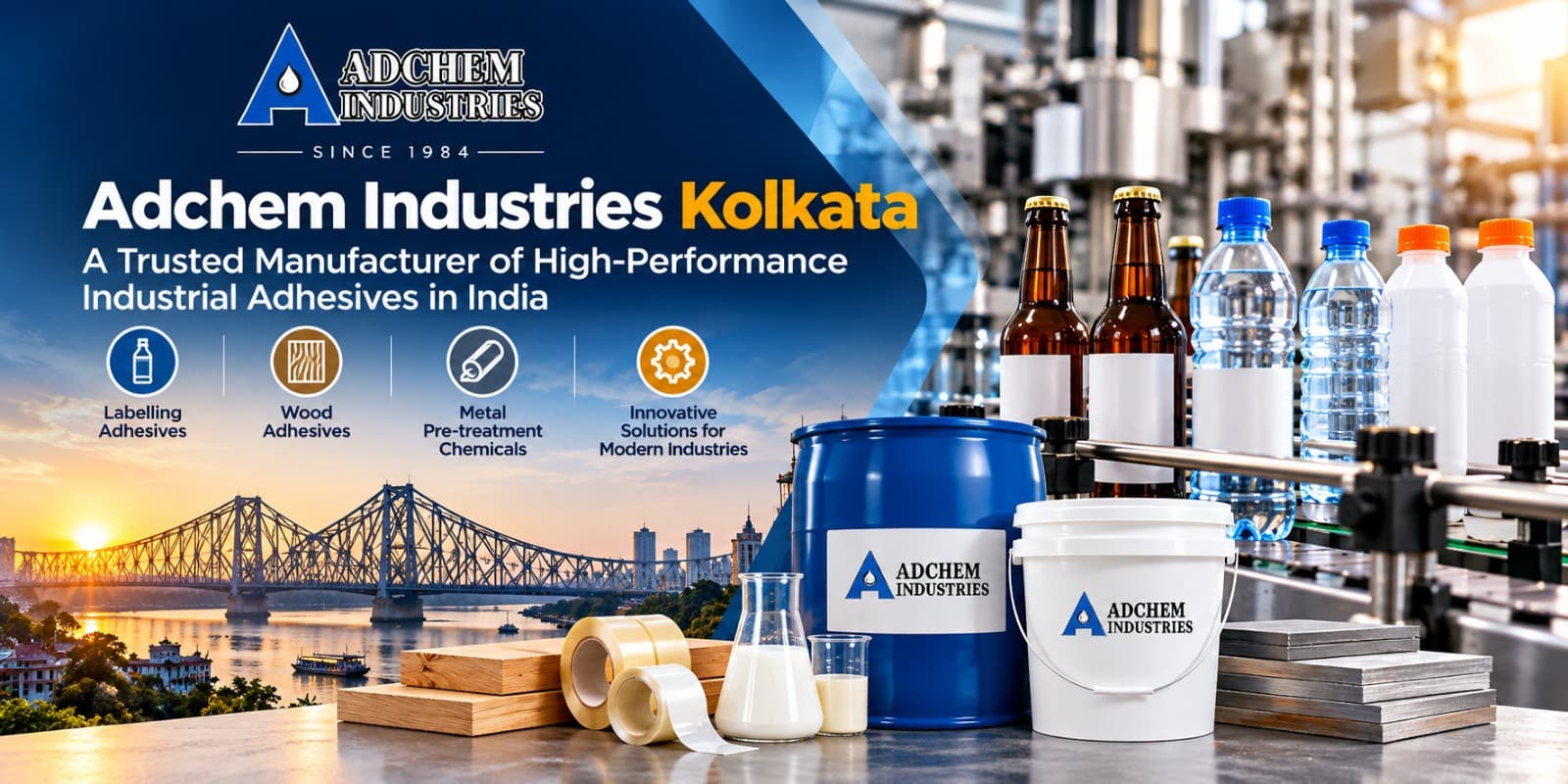
Adchem Industries Kolkata: A Trusted Manufacturer of High-Performance Industrial Adhesives in India
Introduction
Industrial adhesives play an essential role in modern manufacturing. From beverage bottles and pharmaceutical packaging to wooden furniture and metal components, manufacturers depend on reliable bonding solutions to maintain product quality, improve production efficiency and achieve consistent results. Selecting the right adhesive is therefore an important business decision.
India's manufacturing sector continues to grow, creating demand for specialised adhesive products that can perform under different production conditions. Strong bonding, moisture resistance, clean application, machine compatibility and consistent quality are important requirements across industries. An experienced adhesive manufacturer can help businesses meet these requirements through suitable formulations and dependable product solutions.
Established in 1984, Adchem Industries has developed its expertise in industrial adhesives and chemical solutions over several decades. With a product portfolio covering labelling adhesives, wood adhesives and metal pre-treatment chemicals, the company serves various manufacturing and packaging requirements. This article explores its products, industrial applications and the importance of selecting the right adhesive manufacturer.
About Adchem Industries
Adchem Industries was established in 1984 by Mr Samir Dey. Based in West Bengal, the company has developed its expertise in industrial adhesive manufacturing and related chemical solutions over several decades.
With more than four decades of industry experience, Adchem Industries focuses on developing products that support manufacturing, packaging and industrial operations. Its portfolio includes labelling adhesives, wood adhesives, metal pre-treatment chemicals and specialised adhesive formulations.
The company serves customers across India and international markets, with applications spanning several industrial sectors.
Its key areas of operation include:
- ✓Labelling adhesives for glass and PET bottles
- ✓Ice-water-resistant adhesives for breweries
- ✓Acrylic adhesives for specialised packaging applications
- ✓Pressure-sensitive adhesives for BOPP tapes
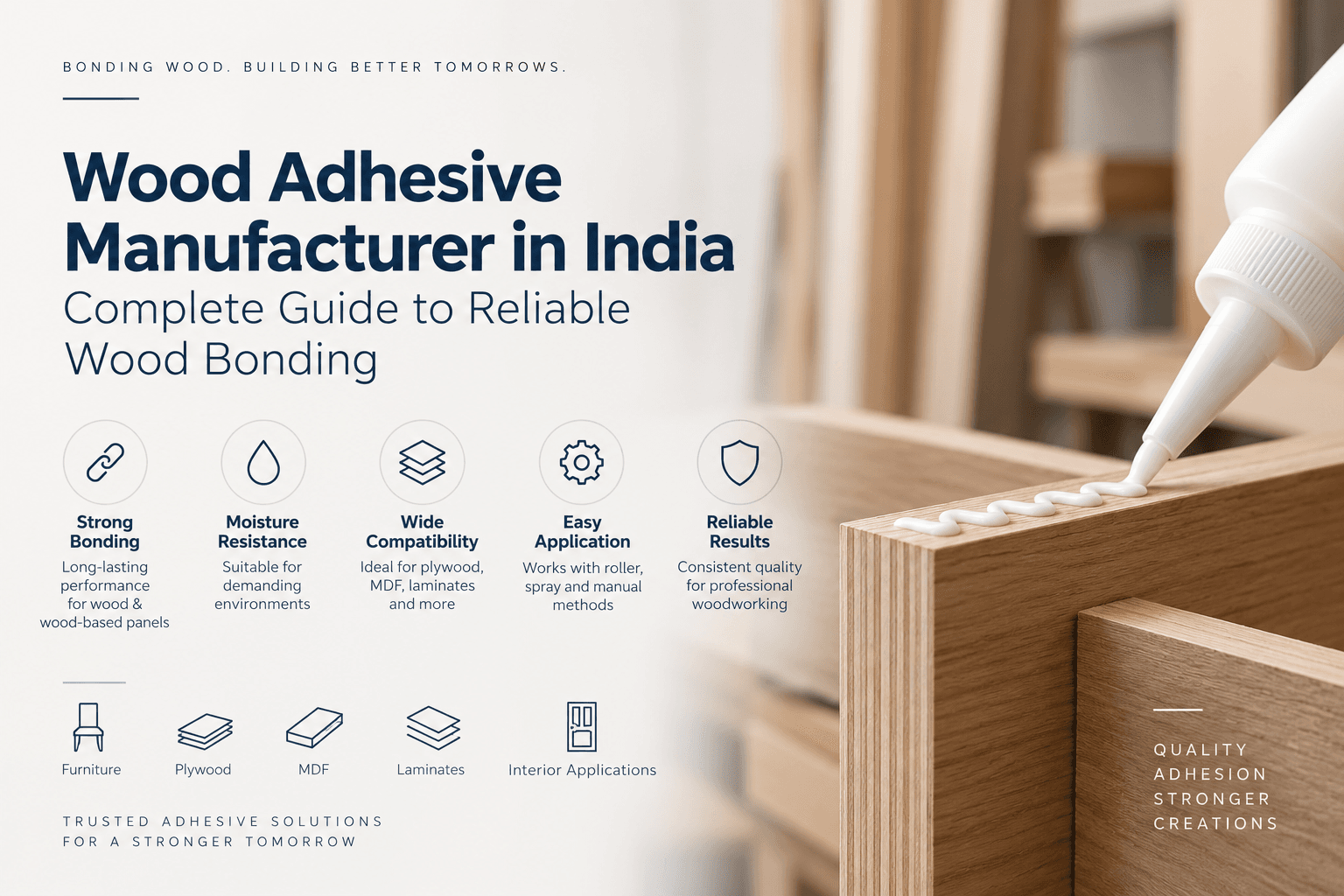
- ✓Wood adhesives for woodworking applications
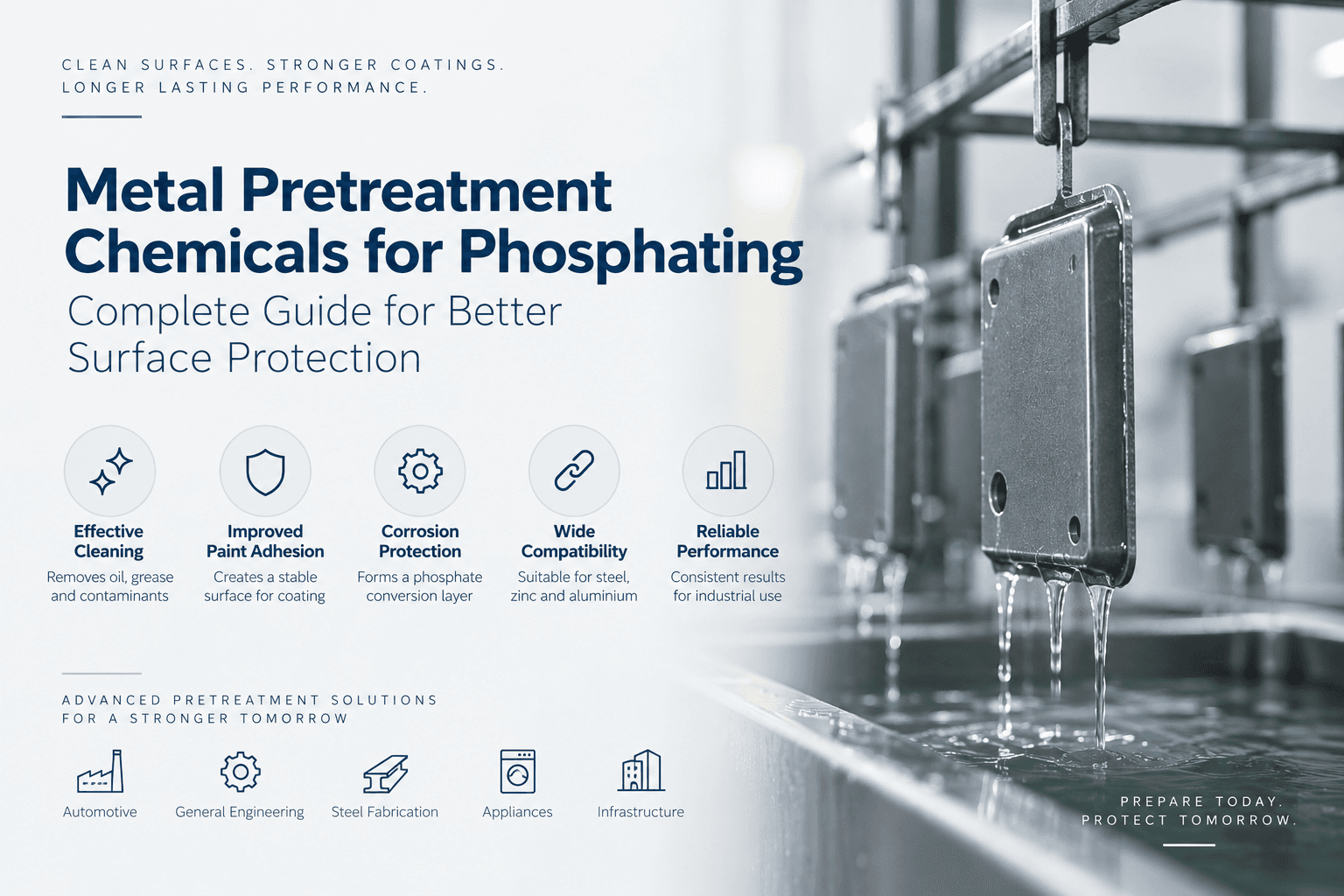
- ✓Metal pre-treatment chemicals for industrial surface preparation
Through its manufacturing experience and product development capabilities, Adchem Industries continues to serve businesses looking for application-specific adhesive solutions.
Manufacturing Infrastructure and Production Capabilities
Manufacturing infrastructure plays an important role in product consistency, production capacity and supply reliability.
Adchem Industries reports that its manufacturing infrastructure covers approximately one acre and includes modern machinery and production equipment. According to its company profile, its stated production capacity is approximately four tonnes per day.
An organised manufacturing facility helps coordinate raw material handling, production processes, quality testing and product dispatch.
For industrial customers, production capacity matters because adhesive requirements often continue throughout the year. Supply interruptions can affect packaging schedules, manufacturing targets and delivery commitments.
The company also identifies laboratory testing and a dedicated research and development unit as important parts of its manufacturing operations.
Importance of Industrial Adhesives in Modern Manufacturing
Industrial adhesives are essential materials in numerous manufacturing environments. They join surfaces, secure labels, support packaging operations and help businesses maintain consistent product presentation.
Their importance extends beyond simply holding two materials together. A suitable adhesive can improve production efficiency, minimise application defects and reduce material wastage.
Common industrial applications include:
- ✓Bottle and container labelling
- ✓Carton and packaging production
- ✓Wooden furniture manufacturing
- ✓BOPP tape production
- ✓Pharmaceutical packaging
- ✓Metal surface preparation
- ✓Food and beverage packaging
Each application requires different adhesive characteristics. Glass, PET plastic, paper, metal and wood have different surface properties. Manufacturers must select formulations according to their materials and working conditions.
A reliable industrial adhesive manufacturer evaluates these requirements before recommending a suitable product.
Labelling Adhesives: A Core Product Category
Labelling adhesives are specially formulated bonding materials used to attach product labels to containers and packaging surfaces. They play an important role in the beverage, food, pharmaceutical and cosmetics industries.
A good labelling adhesive should provide strong initial tack, uniform coverage and reliable adhesion. It should also work efficiently with the labelling equipment used by manufacturers.
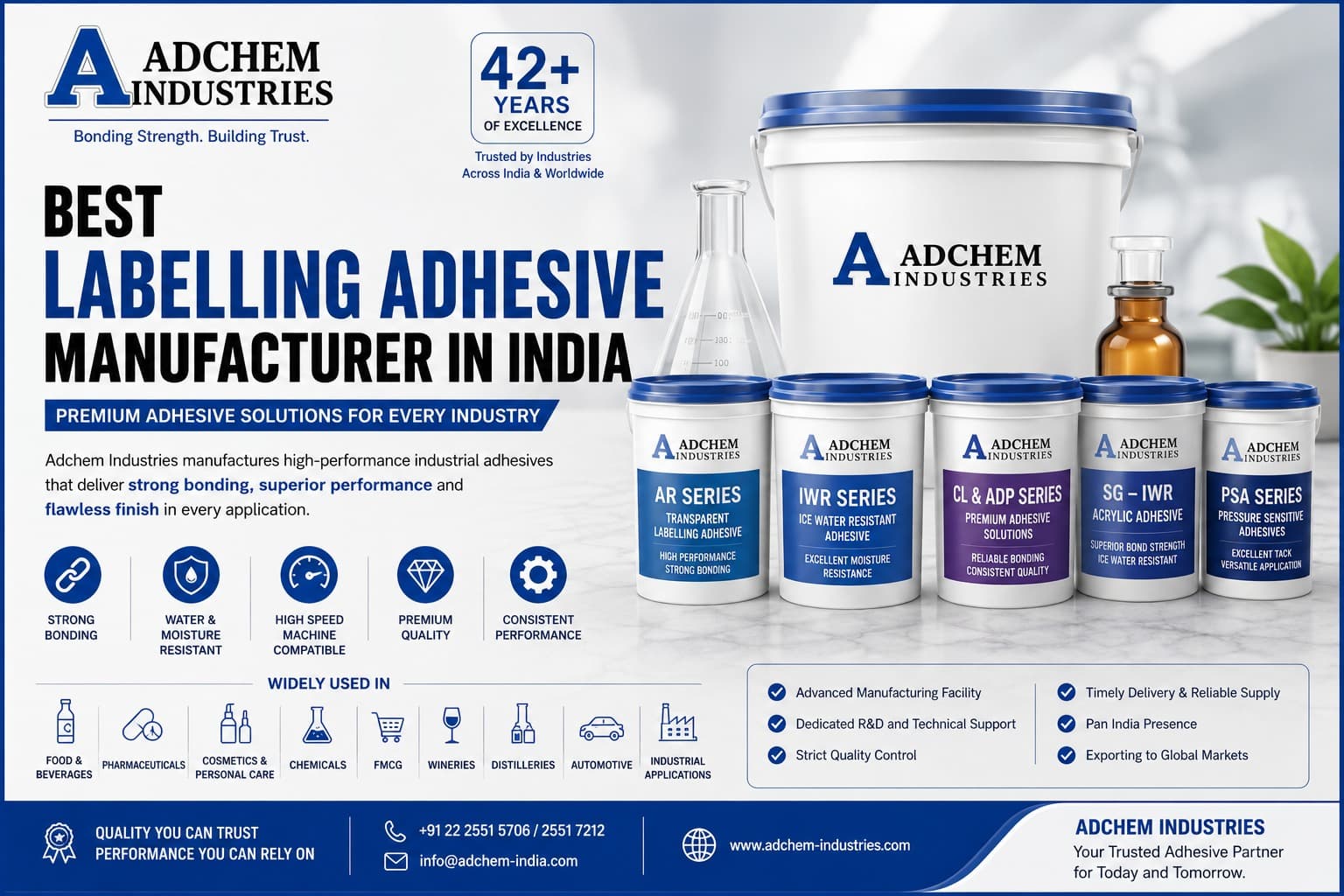
Adchem Industries offers different adhesive formulations for glass bottles, PET bottles, breweries and self-adhesive label applications.
Its labelling adhesive portfolio includes:
- ✓AR and ADG Series
- ✓IWR Series
- ✓CL and ADP Series
- ✓SG-IWR Acrylic Adhesive
- ✓PSA Series
These product families address different packaging requirements instead of relying on one general-purpose formulation. This allows manufacturers to select adhesives according to container material, labelling processes and environmental conditions.
AR and ADG Series: Transparent Labelling Adhesive for Glass Bottles
Glass bottles are widely used for beverages, spirits, pharmaceutical products and food packaging. Their smooth surfaces require adhesives that provide firm bonding without affecting the appearance of the label.
The AR and ADG Series from Adchem Industries is developed for glass and PET bottle labelling applications.
Its important features include:
- ✓Transparent adhesive coating
- ✓High coverage
- ✓Strong initial tack
- ✓Humidity resistance
- ✓Reduced air bubbles and wrinkles
- ✓Compatibility with automatic and semi-automatic labelling machines
- ✓Clean application without visible adhesive marks
A clean finish is particularly useful for premium packaging, where adhesive residue can affect the overall appearance of the product.
These formulations support manufacturers seeking consistent bottle labelling and a professional packaging finish.
IWR Series: Ice Water Resistant Adhesive for Breweries
Beer bottles often experience moisture, condensation and refrigeration during storage, transportation and retail display. Ordinary labelling adhesives may not provide the required performance under these conditions.
The IWR Series from Adchem Industries is developed specifically for brewery labelling applications. IWR stands for Ice Water Resistant, highlighting its suitability for demanding wet and cold environments.
Its listed features include:
- ✓Ice-water resistance for 3 to 7 days after 48 hours of curing on metallised labels
- ✓Compatibility with high-speed labelling machines
- ✓Smooth adhesive flow
- ✓Faster drying characteristics
- ✓Immediate skid-free performance
- ✓Suitability for paper labels and neck foiling
- ✓Label removal during bottle washing
The adhesive supports brewery operations where label positioning, moisture resistance and returnable bottle washing are important considerations.
It is a specialised option for breweries and beer bottling businesses that require dependable labelling performance.
CL and ADP Series: Labelling Adhesive for PET Bottles
PET bottles are commonly used in beverages, food products, personal care items and pharmaceutical packaging. Their lightweight and slightly flexible structure creates specific bonding requirements.
The CL and ADP Series uses modified natural polymer technology and is developed for PET bottle labelling.
Its formulation supports automatic, semi-automatic and manual labelling operations. It also offers humidity resistance, good tack and a colourless coating.
Key product characteristics include:
- ✓Off-white or cream-coloured formulation
- ✓High adhesive coverage
- ✓Reduced air bubbles and wrinkles
- ✓Skid-free label positioning
- ✓Humidity resistance
- ✓Compatibility with pump-type and pot-type machines
- ✓Good shelf life
These characteristics help manufacturers maintain label alignment and packaging consistency across different production volumes.
The CL and ADP Series is relevant to distilleries, wineries, food and beverage manufacturers and pharmaceutical companies.
SG-IWR Acrylic Adhesive for Beer Bottles and TIN Containers
Different packaging materials require different bonding technologies. PET and TIN containers, for example, have surface characteristics that may require specialised adhesive chemistry.
The SG-IWR Acrylic Adhesive is a modified acrylic polymer-based formulation designed for PET bottles, beer bottles and TIN containers.
Its ice-water-resistant properties make it suitable for packaging exposed to refrigeration, condensation and moisture.
Important features include:
- ✓Strong bonding on PET and TIN surfaces
- ✓Ice-water resistance
- ✓Humidity resistance
- ✓Colourless adhesive coating
- ✓Reduced wrinkles and air bubbles
- ✓Clean application without visible residue
- ✓Compatibility with labelling machines
This product is relevant to breweries, distilleries, wineries, food processors and pharmaceutical manufacturers.
For companies handling metal containers or refrigerated products, selecting a formulation with suitable surface compatibility is essential.
PSA Series: Pressure Sensitive Adhesive for BOPP Tapes
Pressure-sensitive adhesives are widely used in packaging and labelling because they create bonds when pressure is applied. They do not require conventional heat activation during application.
The PSA Series from Adchem Industries uses modified acrylic polymer technology. It is developed for BOPP tapes and self-adhesive labels.
BOPP stands for Biaxially Oriented Polypropylene. BOPP tapes are widely used in carton sealing, logistics, e-commerce packaging and industrial bundling.
The PSA Series offers:
- ✓Pressure-sensitive bonding
- ✓Good tack
- ✓Colourless coating
- ✓High coverage
- ✓Humidity resistance
- ✓Reduced adhesive residue
- ✓Compatibility with gumming machines
- ✓Good shelf life
Manufacturers should evaluate tack, peel adhesion, holding power and application conditions when selecting pressure-sensitive adhesives.
Wood Adhesives for Furniture and Woodworking Applications
Wood adhesives are important in furniture manufacturing, carpentry, plywood production and interior furnishing. They help join wooden components and create durable assemblies.
Different woodworking processes require different bonding properties. Some applications need fast setting, while others require longer working time or resistance to humidity.
Important selection considerations include:
- ✓Type of wood and surface condition
- ✓Moisture content
- ✓Required bonding strength
- ✓Application method
- ✓Pressing time
- ✓Curing conditions
- ✓Indoor or outdoor usage
Adchem Industries includes wood adhesives within its wider industrial product portfolio. Businesses should request the relevant technical data sheet before selecting a wood adhesive. The exact formulation, recommended substrates, curing time and moisture resistance should be confirmed for the intended application.
Metal Pre-Treatment Chemicals for Industrial Surface Preparation
Metal surface preparation is an important stage in manufacturing processes involving painting, coating and finishing.
Before applying a protective coating, manufacturers may need to remove oil, grease, rust and other contaminants from metal surfaces. Pre-treatment chemicals help prepare the surface for subsequent processing.
Typical industrial surface preparation requirements include:
- ✓Degreasing to remove oil and grease
- ✓Derusting to remove corrosion
- ✓Phosphating to prepare metal surfaces
- ✓Cleaning before coating operations
- ✓Improving surface consistency
Adchem Industries lists metal pre-treatment chemicals among its product categories.
The correct treatment depends on the metal substrate, existing surface condition and final coating system. Manufacturers should follow the supplier's technical instructions and confirm chemical compatibility, operating concentration, temperature and safety requirements before implementation.
Industries Served by Adchem Industries
Industrial adhesive requirements vary across sectors. A brewery may prioritise ice-water resistance, while a pharmaceutical manufacturer may focus on clean application and label positioning.
Adchem Industries identifies several industries within its customer and application network.
| Industry | Relevant Application |
|---|---|
| Breweries | Beer bottle and neck labelling |
| Distilleries | Glass and PET bottle labels |
| Wineries | Bottle labelling |
| Food processing | Container and product labelling |
| Pharmaceuticals | Bottle and packaging labels |
| Cosmetics | Product label applications |
| Packaging | BOPP tapes and self-adhesive labels |
| Furniture | Wood adhesive applications |
| Metal processing | Surface pre-treatment |
This broad application range reflects the importance of specialised formulations in industrial manufacturing.
Why Adhesive Quality Matters in Packaging
Packaging is often the first physical interaction customers have with a product. A poorly attached label can affect brand presentation, product identification and customer confidence.
For manufacturers, adhesive quality also influences production efficiency.
An unsuitable formulation may cause:
- ✓Label slipping during application
- ✓Wrinkles and air bubbles
- ✓Inconsistent adhesive coverage
- ✓Edge lifting
- ✓Adhesive residue
- ✓Increased production stoppages
- ✓Additional packaging waste
These problems can increase operational costs and affect delivery schedules.
A suitable adhesive should match the container surface, label material, machine speed and environmental conditions.
Businesses should also consider the complete packaging journey. A bottle may pass through filling, labelling, storage, refrigeration, transportation and retail display. Each stage places different demands on the adhesive bond.
Research and Development in Adhesive Manufacturing
Research and development help adhesive manufacturers improve formulations and respond to changing industrial requirements.
Modern packaging materials, faster production lines and different storage environments create new performance expectations.
An effective research and development process may involve:
- ✓Evaluating raw material properties
- ✓Testing adhesive formulations
- ✓Studying bonding performance
- ✓Checking humidity resistance
- ✓Assessing machine compatibility
- ✓Reviewing application defects
- ✓Improving formulation consistency
According to its official company profile, Adchem Industries has a separate research and development unit for developing formulations across its product portfolio.
This capability supports its focus on product development and application requirements.
Quality Assurance and Laboratory Testing
Quality assurance is essential in adhesive manufacturing because even small formulation differences can affect application performance.
A dependable quality control system should evaluate products against relevant specifications before dispatch.
Important testing considerations may include:
| # | Testing Consideration |
|---|---|
| 1. | Viscosity and flow characteristics |
| 2. | Adhesive tack and bonding performance |
| 3. | Application consistency |
| 4. | Drying and curing behaviour |
| 5. | Humidity resistance |
| 6. | Surface compatibility |
| 7. | Storage stability and shelf life |
Adchem Industries states that it tests its manufactured products in a modern laboratory. Its company profile also identifies a separate research and development facility.
Customers should request technical specifications and relevant test documentation to confirm that a particular formulation meets their operational requirements.
How to Select the Right Industrial Adhesive
Choosing an industrial adhesive requires more than comparing prices. Manufacturers should first identify the materials they need to bond and the conditions in which the product will operate.
A practical selection process should consider the following factors:
| # | Factor | Description |
|---|---|---|
| 1. | Surface material | Identify whether the application involves glass, PET, paper, metal or wood. |
| 2. | Production speed | Check whether the adhesive supports the speed and operating requirements of the production line. |
| 3. | Environmental exposure | Consider moisture, refrigeration, humidity and temperature variations. |
| 4. | Application equipment | Confirm compatibility with automatic, semi-automatic or manual machinery. |
| 5. | Bonding requirements | Evaluate initial tack, final adhesion and the required durability. |
| 6. | Storage conditions | Review shelf life, recommended storage temperature and handling instructions. |
| 7. | Technical support | Ask for samples, technical specifications and application guidance. |
When these factors receive proper attention, manufacturers can make more informed purchasing decisions and reduce the likelihood of production problems.
The Importance of Machine Compatibility
Industrial labelling operations depend on coordination between the adhesive, labelling machine, container and label material.
Even a high-quality adhesive may deliver poor results if it does not suit the equipment or operating conditions.
Machine compatibility involves several considerations:
- ✓Adhesive viscosity and flowability
- ✓Pump and roller configuration
- ✓Application temperature
- ✓Machine operating speed
- ✓Adhesive transfer efficiency
- ✓Cleaning and maintenance requirements
For example, high-speed beverage bottling lines need an adhesive that transfers consistently and allows labels to remain correctly positioned.
Adchem Industries lists compatibility with automatic and semi-automatic labelling equipment across relevant product families.
Businesses should conduct production trials before adopting a new formulation on a commercial scale.
Adhesive Performance in Humid and Cold Environments
Humidity and refrigeration can create challenging conditions for packaging adhesives. Condensation may form on bottles when products move from cold storage into warmer environments. This moisture can affect label adhesion if the formulation is not suitable for the application.
Ice-water-resistant adhesives address specific requirements associated with wet bottle handling.
Manufacturers should evaluate:
- ✓Exposure to chilled water
- ✓Duration of refrigeration
- ✓Condensation during transportation
- ✓Moisture exposure after labelling
- ✓Label material and surface compatibility
- ✓Required label removal during bottle washing
The IWR Series and SG-IWR Acrylic Adhesive are examples of products developed for moisture-related labelling requirements.
Performance depends on application conditions, curing time and substrate compatibility. Manufacturers should validate the adhesive under their actual operating conditions.
Reducing Production Waste Through Better Adhesive Selection
Production waste affects both profitability and environmental performance.
Incorrect adhesive selection can contribute to rejected labels, packaging defects, machine cleaning requirements and repeated production operations.
A suitable formulation can help reduce these issues by providing consistent coverage, reliable tack and appropriate bonding strength.
Manufacturers can improve adhesive efficiency through several practices:
- ✓Use the formulation recommended for the substrate.
- ✓Maintain the correct adhesive viscosity.
- ✓Follow application instructions.
- ✓Keep application equipment clean.
- ✓Monitor production defects.
- ✓Store adhesive under recommended conditions.
- ✓Conduct routine quality checks.
These practices can help businesses improve material utilisation and maintain a consistent packaging standard.
International Market Presence and Customer Relationships
Industrial manufacturers often require suppliers capable of serving customers beyond their immediate geographical markets.
Adchem Industries has developed a customer network that extends across India and international locations. Its official website identifies markets including Bangladesh, Nepal, Bhutan, Sri Lanka, Myanmar, Vietnam, Taiwan, Japan, Singapore, Brazil and African regions.
The company also identifies established organisations among its customers, including United Breweries, AB InBev, Bacardi India, Carlsberg Group, Emami and Dabur.
For industrial customers, working with a manufacturer that has experience across varied markets can provide useful insight into different packaging and manufacturing requirements.
International customers should confirm export availability, minimum order quantities, delivery schedules, documentation and applicable regulatory requirements directly with the company.
Why Choose Adchem Industries?
Selecting an adhesive supplier is an important decision for manufacturers. The right partner should offer suitable products, manufacturing experience and clear technical communication. Several factors make Adchem Industries worth considering for industrial adhesive requirements.
| Factor | Description |
|---|---|
| Established industry experience | The company was established in 1984 and has more than four decades of experience in its field. |
| Specialised product portfolio | Its range covers glass bottle adhesives, PET bottle adhesives, brewery adhesives, acrylic adhesives and pressure-sensitive products. |
| Manufacturing infrastructure | The company reports a one-acre manufacturing facility and a production capacity of approximately four tonnes per day. |
| Laboratory facilities | Its company profile describes laboratory testing and a dedicated research and development unit. |
| Multiple industry applications | Its products address requirements across breweries, distilleries, food processing, pharmaceuticals and packaging. |
| International customer network | Its website identifies customers and markets in India and overseas. |
These factors make Adchem Industries a company worth evaluating when sourcing specialised industrial adhesives. Product trials and technical discussions remain essential before final selection.
Comparing Different Adhesive Requirements
Every adhesive category serves a different purpose. Manufacturers should avoid selecting products based only on the general term industrial adhesive.
The following comparison provides a simple overview of the product categories available from Adchem Industries.
| Product Series | Primary Application | Main Consideration |
|---|---|---|
| AR & ADG | Glass and PET bottles | Transparent finish and clean bonding |
| IWR | Brewery labelling | Ice-water resistance |
| CL & ADP | PET bottles | Adhesion to flexible plastic surfaces |
| SG-IWR | Beer bottles and TIN containers | Acrylic bonding and moisture resistance |
| PSA | BOPP tapes and self-adhesive labels | Pressure-sensitive adhesion |
| Wood adhesives | Woodworking | Suitable bonding for wooden substrates |
| Metal pre-treatment chemicals | Metal processing | Surface preparation |
The first five series have individual product descriptions on the company's website. Specific formulation details for wood adhesives and metal pre-treatment chemicals should be confirmed with the manufacturer.
The Future of Industrial Adhesives in India
India's manufacturing and packaging sectors continue to create demand for specialised industrial materials. Growing production volumes, evolving packaging formats and higher expectations for product presentation are important factors influencing adhesive requirements.
Several developments are shaping the industry.
| Development | Description |
|---|---|
| Advanced formulations | Manufacturers are working towards adhesives that offer improved bonding, application consistency and performance under specific conditions. |
| Automation | High-speed production lines require predictable adhesive flow, accurate application and reduced machine interruptions. |
| Packaging innovation | Lightweight PET containers, metal packaging and new label materials require suitable bonding technologies. |
| Operational efficiency | Businesses increasingly focus on reducing material wastage, improving production output and maintaining consistent product quality. |
| Responsible manufacturing | Chemical handling, process optimisation and packaging recyclability are becoming important considerations for industrial businesses. |
The industry will continue to require manufacturers that combine technical expertise with dependable supply and application support.
Practical Tips for Storing and Handling Industrial Adhesives
Correct storage and handling help maintain adhesive quality throughout its intended shelf life. Even a suitable formulation may perform inconsistently if businesses ignore the manufacturer's storage instructions.
Here are some practical recommendations:
| # | Recommendation |
|---|---|
| 1. | Store adhesive in its original, properly sealed container. |
| 2. | Follow the recommended storage temperature. |
| 3. | Protect products from direct sunlight where instructed. |
| 4. | Avoid contamination from dust, water and other chemicals. |
| 5. | Use clean application equipment. |
| 6. | Check manufacturing dates and expiry information. |
| 7. | Follow the recommended mixing or preparation procedure. |
| 8. | Use suitable personal protective equipment. |
| 9. | Maintain proper ventilation where required. |
| 10. | Refer to the product safety data sheet before handling. |
Storage conditions differ between adhesive formulations. Customers should always follow the specific instructions supplied with each product.
The Importance of Technical Support in Industrial Adhesive Purchasing
Industrial adhesive selection sometimes requires product trials and adjustments. A formulation that performs well in one factory may require evaluation before use in another facility. Differences in machine speed, bottle material, label stock, humidity and application temperature can influence results.
Technical support helps businesses identify the source of performance issues and select a more suitable product.
Useful technical discussions may cover:
- ✓Substrate compatibility
- ✓Adhesive viscosity
- ✓Application temperature
- ✓Drying and curing time
- ✓Machine configuration
- ✓Label positioning
- ✓Humidity and water exposure
- ✓Cleaning procedures
Businesses should share accurate information about their production process when requesting recommendations.
How to Request a Product Quote from Adchem Industries
Businesses planning to purchase industrial adhesives should prepare their requirements before contacting a manufacturer.
A clear enquiry helps the supplier recommend relevant products and provide more accurate commercial information.
Include the following details in your enquiry:
- ✓Company name and industry
- ✓Required adhesive category
- ✓Packaging or substrate material
- ✓Current labelling machine details
- ✓Estimated monthly consumption
- ✓Required packaging size
- ✓Delivery location
- ✓Technical or performance requirements
For example, a brewery looking for ice-water-resistant labelling adhesive should mention its bottle material, label stock, production speed and refrigeration conditions.
Similarly, a manufacturer looking for PET bottle adhesive should specify the type of PET container and labelling equipment.
Visit the official Adchem Industries website to review its product portfolio and contact the company for product enquiries, technical information and commercial discussions.
Frequently Asked Questions About Adchem Industries
1. What does Adchem Industries manufacture?
Adchem Industries manufactures industrial adhesive products and chemical solutions. Its portfolio includes labelling adhesives, wood adhesives and metal pre-treatment chemicals for different industrial applications.
2. When was Adchem Industries established?
The company was established in 1984 by Mr Samir Dey. It has more than four decades of experience in industrial adhesive manufacturing.
3. Which industries use Adchem Industries products?
Its products are relevant to breweries, distilleries, wineries, food processing companies, pharmaceutical manufacturers, cosmetics businesses, packaging companies and woodworking applications.
4. Does Adchem Industries manufacture adhesive for PET bottles?
Yes. Its CL and ADP Series is specifically developed for PET bottle labelling. The formulation is designed for automatic, semi-automatic and manual labelling equipment.
5. Which adhesive is suitable for brewery labelling?
The IWR Series is developed for brewery applications where labels may encounter ice water, condensation and refrigeration. The SG-IWR Acrylic Adhesive is another option for beer bottles and other suitable packaging surfaces.
6. Does the company offer adhesive for BOPP tapes?
Yes. Its PSA Series is a modified acrylic polymer-based pressure-sensitive adhesive developed for BOPP tapes and self-adhesive labels.
7. Does Adchem Industries serve international customers?
Yes. The company's official website identifies an international business network covering several countries across Asia, Africa and South America.
8. How can I request a quotation?
You can contact the company through its official website or email adchemindustries@gmail.com. Share your adhesive requirements, application details and estimated quantity to receive relevant product and pricing information.
9. Does Adchem Industries provide laboratory testing?
The company states that it has a modern laboratory where manufactured products are tested. It also reports having a separate research and development unit for formulation development.
10. How can I select the right adhesive?
Consider the substrate material, production speed, environmental exposure, machine compatibility, bonding requirements and storage conditions. Request technical documentation and product samples before finalising a purchase.
Final Words
Industrial manufacturing depends on reliable materials, efficient processes and consistent product quality. Adhesives may appear to be a small part of the overall production system, but their performance can influence packaging appearance, production speed, material wastage and customer satisfaction. From brewery bottle labelling to pharmaceutical packaging, manufacturers need formulations that match their substrates and operating environments. A suitable adhesive should provide dependable bonding, smooth application, appropriate moisture resistance and compatibility with production machinery. Businesses must also consider storage stability, technical documentation, application support and the supplier's ability to meet future demand. These factors help create a more efficient purchasing process and reduce the risk of avoidable production problems.
Established in 1984, Adchem Industries brings more than four decades of manufacturing experience to the industrial adhesive sector. Its product portfolio covers transparent labelling adhesives, ice-water-resistant formulations, PET bottle adhesives, acrylic adhesives, pressure-sensitive adhesives, wood adhesives and metal pre-treatment chemicals. Its manufacturing infrastructure, laboratory testing facilities and dedicated research and development unit form important parts of its business operations. The specialised AR and ADG, IWR, CL and ADP, SG-IWR and PSA product families address different industrial applications.
This product diversity allows businesses to evaluate adhesive solutions according to their individual packaging and manufacturing requirements. Whether a company operates a brewery, distillery, pharmaceutical facility, food processing unit or packaging business, selecting the correct formulation can make a meaningful difference to daily operations. Businesses interested in exploring these solutions can visit the official Adchem Industries website, review the available product categories and contact the team for technical information, product samples and commercial enquiries. Choosing the right adhesive partner begins with clear requirements, careful product evaluation and a focus on long-term manufacturing performance.
Ready to Source the Right Industrial Adhesive?
Get a free Adchem Industries consultation and product sample tailored to your manufacturing line.