Why IWR Adhesive for Breweries in Thailand Is Essential for Strong Bottle Labelling
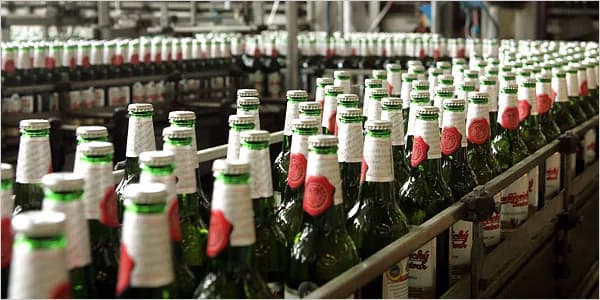
Beer packaging in Thailand is changing fast. Breweries now work in a market shaped by stronger local demand, tourism recovery, premium packaging expectations, and rising pressure to improve waste collection and material recovery. In this environment, IWR adhesive for breweries in Thailand has become a practical business tool rather than a narrow factory input.
For breweries, labels must do more than look attractive. They must stay in place when bottles are cold, wet, packed tightly, moved quickly, and stored under chilled conditions. That is where ice water resistance becomes vital. An adhesive that performs badly in condensation or ice buckets can damage shelf appeal, slow the line, and weaken brand trust. A strong IWR adhesive for breweries in Thailand helps protect label position, visual quality, and production stability in real operating conditions.
This matters even more in Thailand because glass packaging still plays a major role in beverages, while sustainability targets are rising. When breweries choose adhesives that support good wash-off, strong wet tack, and clean performance, they support both brand presentation and more efficient packaging systems.
What is IWR adhesive?
IWR stands for ice water resistant. In bottle labelling, it refers to adhesive systems designed to hold labels firmly even when the bottle is cold, damp, or exposed to condensation and chilled storage. This matters for beer because bottles often move from filling to cooling, transport, retail refrigeration, and consumer ice buckets. Those features are central to IWR adhesive for breweries in Thailand because local breweries need labels that stay neat in hot ambient conditions and chilled end use.
Why breweries in Thailand need ice water resistance
Thailand's beverage industry is closely tied to foodservice, tourism, retail, and warm-weather consumption. Beer served in chilled cabinets, convenience stores, outdoor venues, and ice buckets creates a harsh test for labels. If the label lifts at the edge or slips out of position, the bottle loses its polished look immediately. That is why IWR adhesive for breweries in Thailand is not a luxury feature. It is a packaging requirement for any brewery that wants reliable bottle presentation from plant to point of sale.
How bottle labels fail without the right adhesive
When the adhesive is poorly matched, several faults appear. Corners may curl. Labels may wrinkle, shift, or detach. Moisture can weaken bond strength, and chilled handling can magnify small errors into visible defects. In brewery packaging, that failure is costly because the label carries brand image, legal details, barcodes, and product identity. A dependable IWR adhesive for breweries in Thailand reduces these risks and supports a cleaner final pack.
The science behind IWR adhesive performance
Ice water resistant adhesives are built to maintain bond integrity under moisture stress. In practice, suppliers focus on properties such as high wet tack, quick set speed, and clean machinability. These traits matter because line speed alone is not enough. The adhesive must grip early, stay stable, and keep the label smooth after cooling. That performance profile defines good IWR adhesive for breweries in Thailand.
Why glass bottles still matter in the Thai market
Glass remains significant in beverage packaging because it supports premium presentation, strong barrier performance, reuse, and recycling. For breweries, this means label adhesives must suit both commercial presentation and downstream handling. A suitable IWR adhesive for breweries in Thailand helps labels remain secure in market circulation while also fitting wider packaging efficiency goals when reuse or recycling enters the equation.
Current market conditions make label quality more important
Thailand's beverage sector is on a growth path. In a more competitive retail environment, bottle appearance matters. A neat label sends a signal of quality before the customer even reads the brand story. A poor label sends the opposite message. This is one reason IWR adhesive for breweries in Thailand can influence more than production metrics. It can shape brand perception, shelf confidence, and repeat purchase behaviour.
Key benefits breweries gain from IWR adhesive
Breweries choose specialised label adhesives for practical reasons, not merely technical fashion. The right product helps the bottle look right and move smoothly through the plant.
Here are the main benefits:
- ✓Strong grip on cold and wet glass
- ✓Better resistance to condensation and ice water
- ✓Faster, cleaner running on labelling machines
- ✓Fewer rejects caused by slipped or wrinkled labels
- ✓Better shelf appearance in retail chillers
- ✓Improved confidence during transport and storage
Casein versus non-casein options
Traditional casein-based adhesives have long been used for cold-filled returnable glass bottle labelling because they perform well on cold and wet surfaces and work reliably in wash-off processes. However, casein systems can face price volatility, bacterial sensitivity, thermal instability, and shorter shelf life. Non-casein alternatives have been developed to address those limits while still delivering strong wet tack and ice water resistance. For breweries reviewing IWR adhesive for breweries in Thailand, the choice should depend on bottle type, wash-off needs, line speed, hygiene expectations, and storage conditions rather than habit alone.
Why wash-off performance matters for breweries
A bottle label must stay on during sale and use, but in returnable systems it should also release cleanly during bottle washing. Residue can raise washer costs, increase downtime, and reduce line efficiency. In simple terms, IWR adhesive for breweries in Thailand should not only hold fast in ice water. It should also support a cleaner recovery process where returnable glass is used.
Sustainability pressure is rising in Thailand
Packaging is now judged by its life after sale as well as its performance on the line. Thailand is moving towards higher packaging recovery expectations, and major beverage players are already reporting strong action on circular economy goals.
♻️ Glass Recovery Goals
Thailand targets 86 percent glass packaging collection and recycling by 2027. Adhesive wash-off performance directly supports this goal.
🌿 Circular Economy
Active circular economy work including glass backhaul logistics and voluntary EPR for used packaging is shaping adhesive requirements.
📋 EPR Alignment
Breweries that choose adhesives supporting clean wash-off and material recovery align with Thailand's evolving packaging policy direction.
🌱 Returnable Systems
Labels that release cleanly in bottle washing reduce washer costs, water use, and downtime while supporting reuse systems.
Common mistakes breweries should avoid
Buying only on price per kilogram
Problem: A cheaper product may need heavier application, create more stringing, increase downtime, or raise reject rates.
Solution: Evaluate total cost in use, not purchase price alone.
Skipping realistic trials
Problem: Generic promises do not reflect real line, bottle, and label performance under chilled and wet conditions.
Solution: Run structured trials on actual production setup before committing.
Assuming one formula suits every condition
Problem: Bottle type, label stock, and line speed all affect which adhesive performs best.
Solution: Match the adhesive to the exact substrate, service temperature, and wash-off requirement.
Ignoring wash-off and residue behaviour
Problem: Focusing only on initial tack while ignoring wash-off, residue, and machine cleanliness leads to costly surprises.
Solution: Test the full performance profile, not just grip strength.
What breweries should test before approval
A proper approval process reduces costly surprises later. The adhesive should be tested on real bottles, with actual label stock, at line speed, under chilled and damp conditions.
| Test Area | What the Brewery Should Check | Why It Matters |
|---|---|---|
| Wet tack | Early grip on cold glass | Prevents label slip |
| Ice water resistance | Bond after chilling or ice exposure | Protects retail appearance |
| Set speed | Time needed for stable placement | Supports high-speed output |
| Wash-off | Residue after bottle washing | Important for returnable glass |
| Machine cleanliness | Stringing, splash, and build-up | Reduces downtime |
| Label finish | Wrinkles, lift, and alignment | Protects shelf appeal |
How the right adhesive supports production efficiency
Efficient labelling depends on chemistry and process control working together. If the adhesive runs cleanly, operators can maintain more stable output with fewer interruptions. If the adhesive strings, chars, or doses poorly, the whole line suffers. For packaging managers, this means IWR adhesive for breweries in Thailand can improve throughput, reduce reject bottles, and support more predictable costs over long production runs.
Brand image begins with label appearance
Consumers may never think about adhesive, yet they notice the result instantly. A bottle with a flat, centred, dry-looking label appears premium and trustworthy. A bottle with raised edges or rippled paper looks tired and badly handled. In competitive retail, that visual judgement happens in seconds. Thai beer brands, regional brewers, and craft-focused producers all need packaging that looks sharp in chilled displays and on-premise service. That is another reason IWR adhesive for breweries in Thailand has commercial value.
Why supplier support matters
A strong adhesive alone is not enough. Breweries also need technical advice on application temperature, dosage, label stock compatibility, machine settings, and cleaning routines. Suppliers that support trials and troubleshooting can help breweries avoid slow, costly error cycles. IWR adhesive for breweries in Thailand should be treated as part of a complete labelling system, not as a commodity purchased in isolation. Good support often leads to faster optimisation and more stable daily output.
Practical checklist for choosing the right adhesive
Before any final purchase, breweries should review the full packaging picture. The most reliable decision comes from careful matching rather than guesswork.
Confirm bottle type and label material.
Check if the line is one-way or returnable.
Test wet tack on cold bottles.
Verify ice water resistance after chilling.
Review wash-off and residue performance.
Measure actual consumption during line trials.
Inspect line cleanliness after long runs.
Check shelf appearance in real retail conditions.
Align the adhesive choice with sustainability goals.
Train operators on correct application control.
Frequently Asked Questions
1. What does IWR mean in brewery labelling?
IWR means ice water resistant. It describes an adhesive designed to keep labels attached when bottles are cold, wet, or exposed to condensation and ice.
2. Is IWR adhesive only useful for export breweries?
No. It is useful for local and export breweries alike. Thailand's climate, chilled retail, on-premise service, and convenience distribution all create wet and cold label stress.
3. Can non-casein adhesives replace traditional systems?
In many applications, yes. Non-casein products have been developed to offer strong wet tack, fast set, clean running, and good ice water resistance, while reducing some storage and stability issues linked with traditional casein systems.
4. Why is wash-off performance important?
For returnable glass, labels should stay secure during use but remove cleanly in bottle washing. Good wash-off helps cut residue, reduce downtime, and improve bottle recovery efficiency.
5. How often should a brewery review its adhesive choice?
A brewery should review it whenever bottle type, label stock, line speed, sustainability targets, or washing conditions change. Packaging systems evolve, so adhesive selection should evolve too.
Final Words
Breweries succeed when small technical decisions quietly support bigger commercial goals. Adhesive is one of those decisions. It seems minor until labels begin to wrinkle, lift, or slide on chilled bottles in a retail cabinet or an ice bucket. At that point, the damage is no longer technical. It becomes visual, commercial, and reputational. That is why IWR adhesive for breweries in Thailand deserves serious attention from packaging teams, plant managers, and brand owners alike.
A strong adhesive helps the label stay aligned, readable, and attractive from filling line to customer hand. It also helps the plant reduce unnecessary waste, lower reject rates, and keep production moving with fewer interruptions. When an adhesive performs well, it protects appearance and output at the same time.
Breweries that test carefully, work with technically sound suppliers, and align adhesive choice with long-term packaging strategy put themselves in a stronger position. They gain sharper shelf presentation, steadier line performance, and better readiness for the market conditions ahead. That makes adhesive selection more than a factory purchase. It becomes a smart packaging decision with lasting commercial weight.
Need Expert Guidance on IWR Adhesive for Breweries in Thailand?
Our team specializes in high-performance IWR adhesive solutions for breweries across Thailand and Southeast Asia.